
A broken piece of gold jewelry is almost never fit for the bin - but a bad home repair can cost you more than the original damage. A drop of glue on a gold chain, one squeeze too many with the pliers, a "trick" found in a video: and a piece that was worth a lot ends up ruined for good.
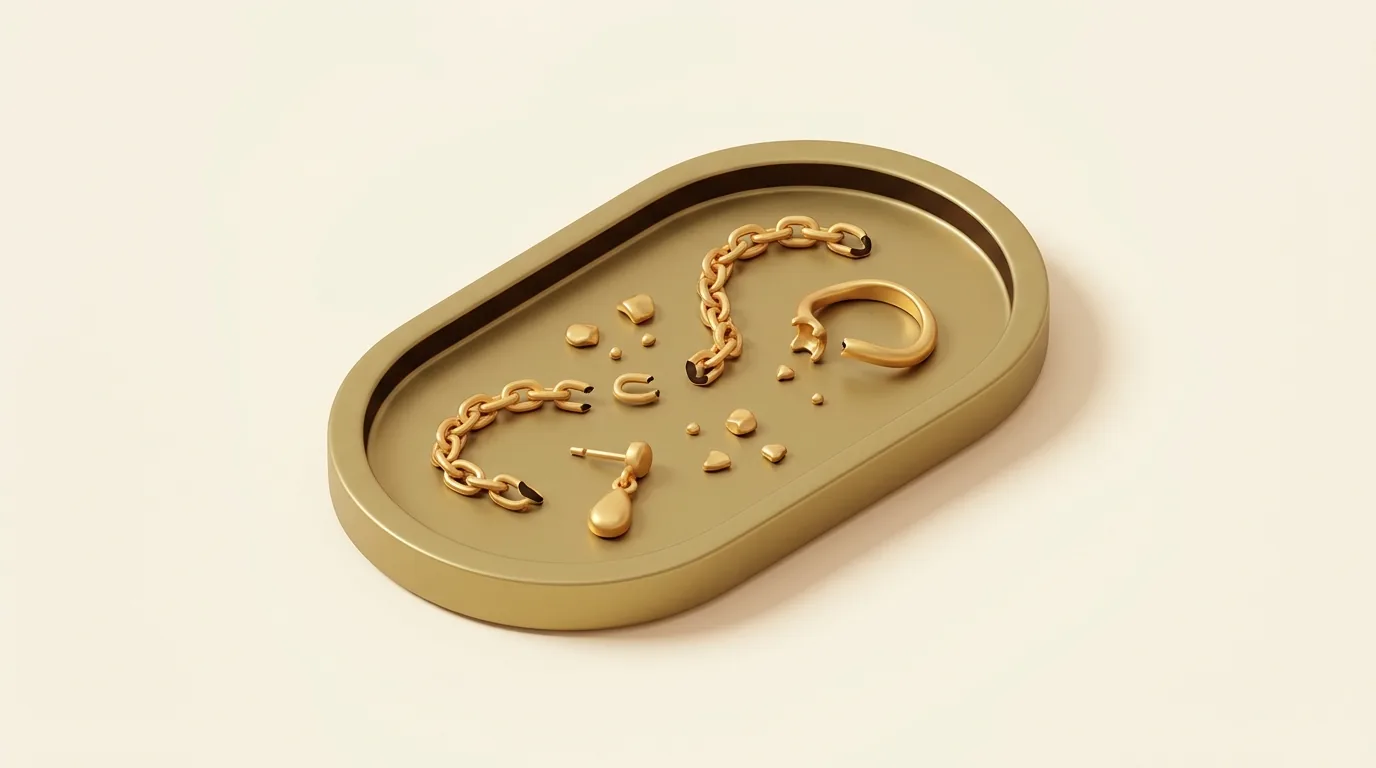
The truth is there is a clear line between what you can fix yourself in two minutes and what requires a workshop. Knowing where that line lies saves you both needless expense and irreparable mistakes.
At Jayma Or, every day in Dakar we see jewelry in every state: broken links, worn-out clasps, deformed rings. This experience with gold and its karats lets us tell you honestly what is easy to repair and what should not be improvised. Here is the guide.
In this article, you will learn:
- the small repairs you can attempt at home, safely;
- the beginner's mistake that ruins the most jewelry;
- the cases where a professional is absolutely necessary;
- when repairing no longer makes sense - and what to do then.
Always start by assessing the damage
Before doing anything, examine the piece in the light, calmly:
- What exactly? An open link, a loose clasp, a stone that moves, a bent ring, a broken thread?
- Which karat? 21K gold (87.5%) is softer than 18K (75%) or 14K (58.3%). The higher the karat, the softer the metal - and the easier it is to deform through clumsiness.
- What value? Sentimental or financial: the higher it is, the less you should improvise.
That one minute of observation decides everything: attempt it yourself, or hand the piece over.
The small repairs you can attempt
A few simple actions are within your reach, on low-value pieces without stones:
- Tightening a slightly open link. With fine-nose pliers, close the link very gently, without forcing. With gold, gentleness always beats force.
- Untangling a knotted chain. Lay the chain flat, add a drop of oil, and work the knot loose with two pins, without pulling. Pulling on a knotted chain means breaking it.
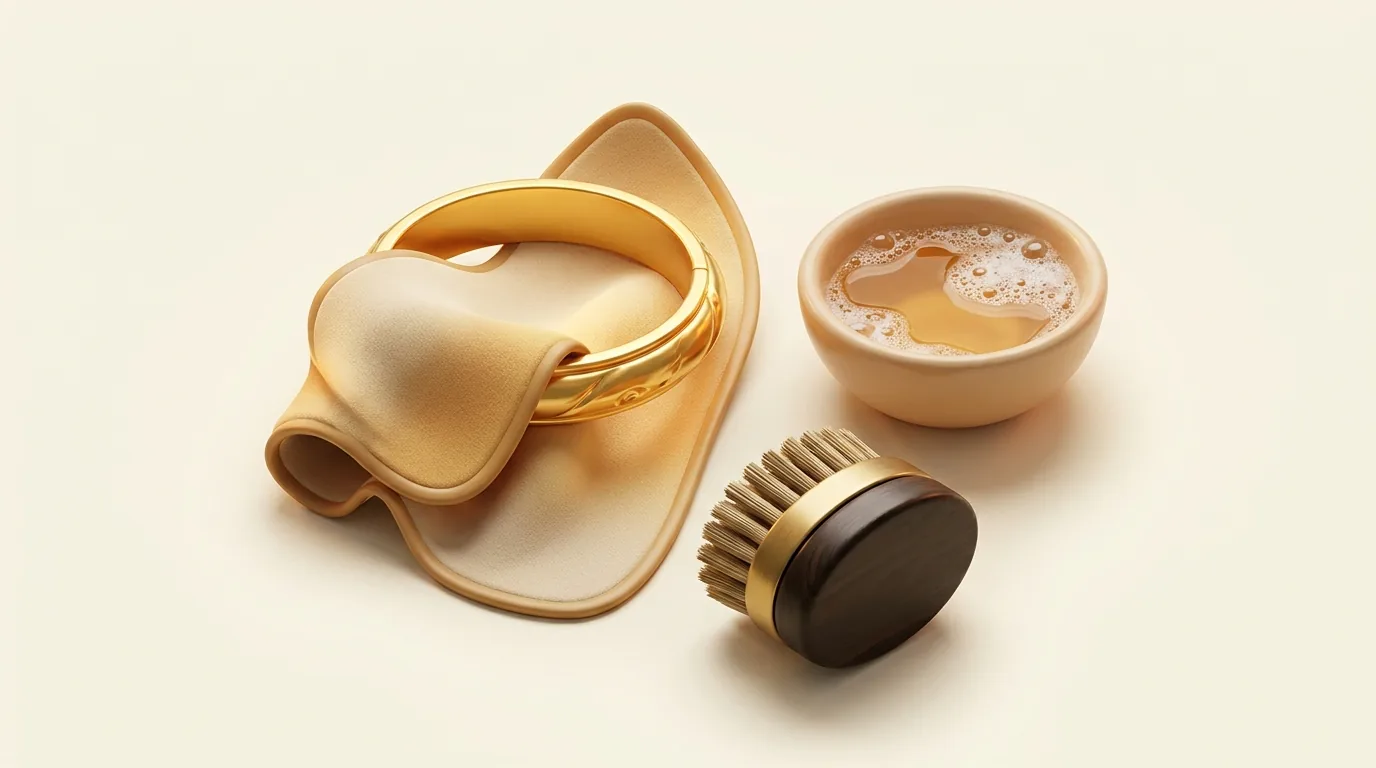
- Restoring the shine. Before even talking about "repair", a good cleaning is often enough. Follow our guide to cleaning your gold jewelry at home: lukewarm water, mild soap, a microfiber cloth.
The beginner's mistake to avoid at all costs: glue. No glue bonds gold. It yellows, it gives way, and above all it seeps in: once glued, a piece is far more difficult and costly for a professional to repair cleanly. To join gold, it has to be soldered - and soldering is a workshop job.
When a professional is absolutely necessary
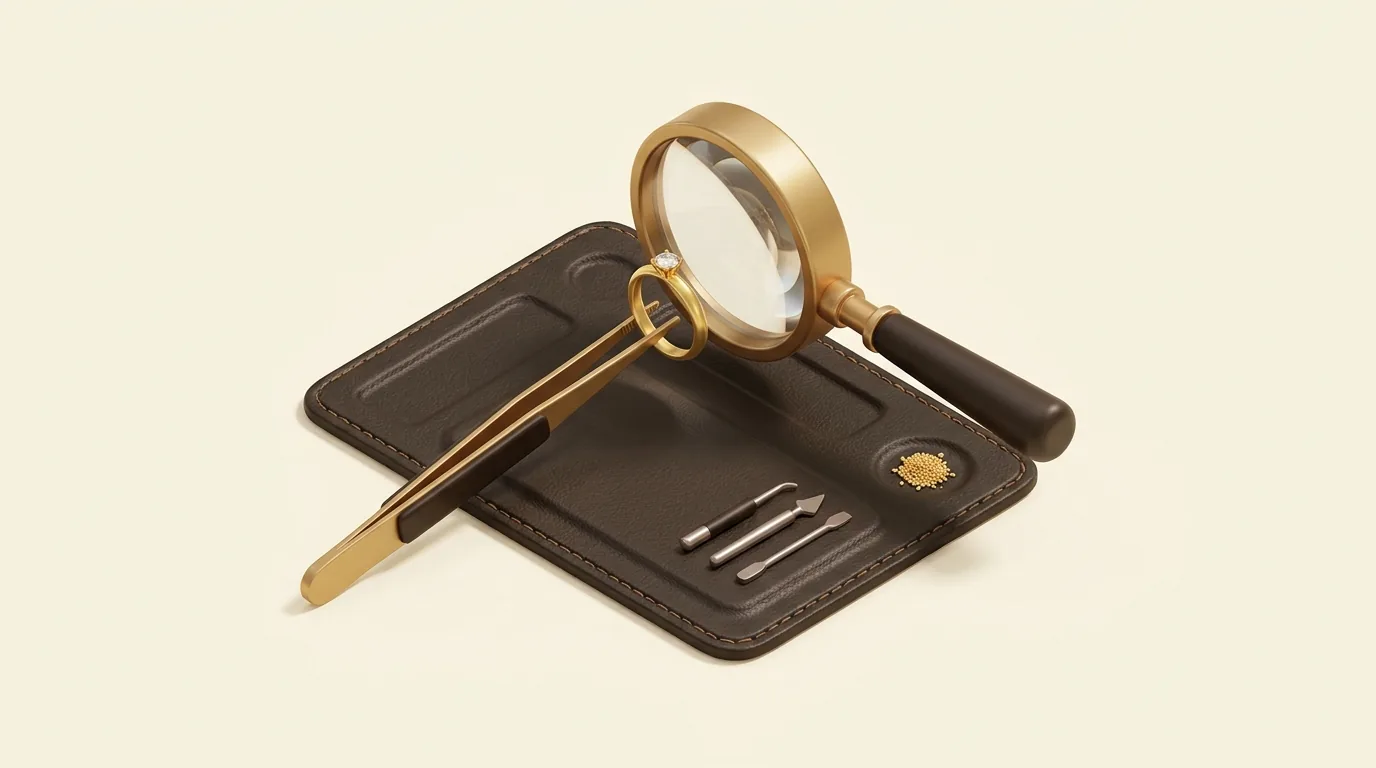
In the majority of real cases, the repair goes through an equipped jeweler. Hand the piece over as soon as it involves:
- soldering a broken link, a clasp, or a loop: soldering requires the right temperature and the right alloy, at the right karat;
- resetting a stone, tightening prongs: a badly set stone eventually falls out and is lost;
- straightening a bent ring or resizing it;
- repairing an antique, high-value, or deeply sentimental piece: here, the risk of a home mistake is simply too great;
- anything involving fragile stones or complex settings.
A good professional works with gold of the same karat as your piece: the repair stays invisible and the value of the piece is preserved.
And when repairing no longer makes sense?
Sometimes the math is simple: the repair costs more than the piece is worth or brings you. This is often the case for:
- a piece broken in several places, deformed, or heavily worn;
- a mismatched piece (a single earring) you will no longer wear;
- broken gold or scrap that has been sitting in a drawer for years.
Good news: even broken, your gold keeps all its value. A damaged piece contains exactly the same amount of gold as an intact one of the same weight and karat. Its value is calculated to the gram, based on the daily world rate. Rather than paying for a repair that isn't worth it, you can resell it - we also buy broken gold and scrap.
Frequently Asked Questions
Can you really repair a gold chain at home?
You can close a simply opened link with fine pliers and plenty of gentleness. But a truly broken link must be soldered: that is a workshop job, not a glue job.
Can glue repair a piece of gold jewelry?
No. Glue doesn't hold on gold, it yellows, and it complicates the real repair. Gold is joined by soldering, done by a professional.
How much does a gold jewelry repair cost?
It depends on the type of repair, the karat, and the complexity. Before committing to any expense, always compare the estimated cost to the real value of the piece. If the repair exceeds that value, reselling is often the wiser choice.
My piece is too damaged to be repaired. Is it lost?
Not at all. Gold is never lost: its value comes from the metal itself, not the condition of the piece. You can resell it by weight, based on the daily rate.
Have a doubt before repairing? Ask us first
You now know what can be handled at home, what requires a workshop, and when repairing is no longer worth it.
Before committing to a repair, do the math properly: take advantage of a free, no-obligation estimate to find out the true value of your piece. Send a photo over WhatsApp to +221 78 111 66 87, or book an appointment. We test and weigh in front of you.
And if the repair isn't worth it, remember: even broken, your gold turns into cash today. Check the daily rate, then write to us.