
What dulls your gold jewelry the most isn't dirt — it's often the product used to clean it. Toothpaste, bleach, a brush that's too hard, a "miracle product": every year, perfectly sound pieces are scratched or eaten away at home, with the best intentions in the world.
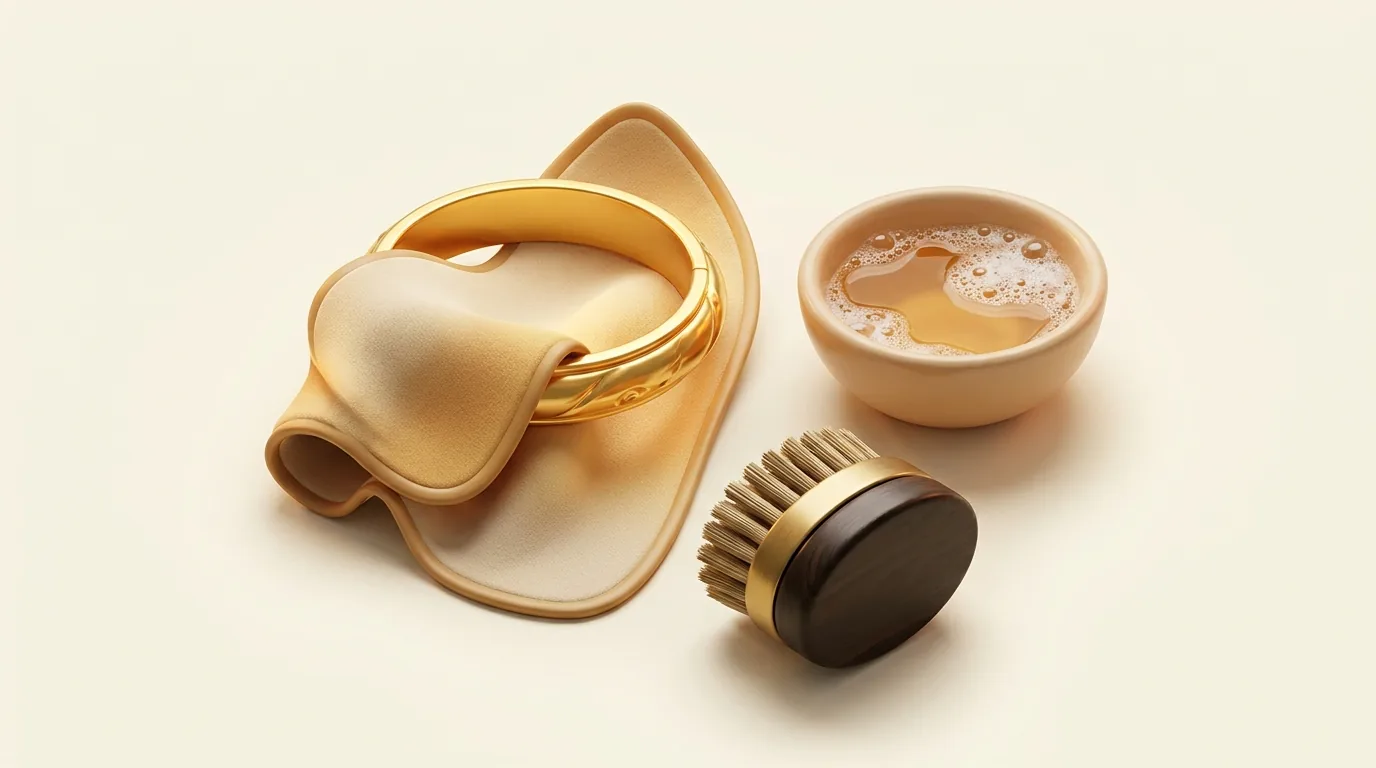
The good news? Caring for gold is actually very simple. It takes almost nothing: warm water, mild soap, a cloth. The secret isn't in an expensive product, but in the method — and above all in what to avoid.
At Jayma Or, we handle and test gold every day in Dakar: new, antique and damaged pieces, of every karat. We know what makes it shine and what damages it. Here, with full transparency, is how to keep your jewelry gleaming at home, with no risk.
In this guide, you'll learn:
- the gentle cleaning method that works for almost all gold jewelry;
- the products and habits to banish entirely;
- how to store your jewelry so it stops getting scratched;
- when a simple cleaning is no longer enough and you need a professional.
The gentle method, step by step
For 90% of your gold jewelry (without fragile stones or pearls), this routine is enough:
- Prepare a warm bath. In a bowl, mix warm water (never scalding) with a few drops of mild dish soap.
- Let it soak for 10 to 15 minutes. The soap dissolves the grease, cream and sweat that dull gold.
- Brush gently. Use a toothbrush with soft bristles, working gently into the nooks (links, settings, the backs of rings).
- Rinse with clean water. Important: do it over a bowl, never directly in the sink, so you don't lose a piece down the drain.
- Dry with a soft cloth. A microfiber cloth dabs away the moisture and restores shine. Avoid paper towels, which are more abrasive than they seem.
Try it: clean a single chain tonight, and compare it the next day to an untreated piece. The difference in shine is immediate.
What you should NEVER do
This is where most of the damage happens. Remember this list:
- No toothpaste. It's the #1 mistake. Toothpaste is abrasive: it microscopically scratches the gold and, over time, dulls it.
- No bleach or chlorine. Chlorine attacks gold alloys and can weaken, even crack, certain pieces. Also take your jewelry off before the pool.
- No harsh household products or pure ammonia.
- No hard brush or scouring sponge. Soft, always.
- Beware of stones and pearls. Emeralds, opals, pearls and glued-on pieces don't like prolonged soaking or soap. When in doubt, stick to a dry cloth — or ask a professional for advice.
Good everyday habits
The best care is the kind that prevents grime and knocks before they happen. A few simple habits extend the life of your jewelry:
- Get dressed, then put your jewelry on last. Perfume, cream, hairspray and makeup leave a film that dulls gold. The jewelry goes on afterward.
- Take it off for messy tasks: housework, cooking, gardening, sport, showering. 18 and 21-karat gold is relatively soft; knocks and products wear it down faster than you'd think.
- Wipe it after wearing. A quick pass with a soft cloth in the evening is enough to remove sweat.
Store it properly (the detail that changes everything)
A scratched piece of jewelry was most often scratched... by another piece of jewelry. Gold scratches on contact with other metals and hard stones. The rule: each piece separately.
- Store your jewelry in a box lined with soft fabric, each piece in its own compartment or pouch.
- Don't mix gold with silver or costume jewelry loose in a pile.
- Hang chains rather than tossing them in a heap: you'll avoid the knots that damage them when you force them apart.
- Keep them away from moisture.
When to hand it over to a professional
Home cleaning has its limits. Entrust your piece to an expert if:
- the gold has lost its shine despite proper cleaning (a professional polish revives what a cloth can't);
- a clasp sticks, a link is bent or a stone is loose;
- it's an antique, valuable or deeply sentimental piece.
For these cases, read our guide on how to repair your gold jewelry: it explains what can be handled at home and what requires a workshop.
Frequently Asked Questions
Is toothpaste really bad for gold?
Yes. Many people recommend it, but it's abrasive and ends up micro-scratching the surface, which becomes dull over time. Warm soapy water is more effective and completely risk-free.
How often should I clean my jewelry?
For pieces worn every day (a wedding band, a chain, studs), a gentle cleaning every two to four weeks is enough. A quick wipe in the evening maintains the shine between cleanings.
My yellow gold has darkened — is it fake?
Not necessarily. Pure gold doesn't darken, but the alloys (copper, silver) it contains can react with sweat, products or chlorine. A cleaning often fixes the problem. To remove any doubt, a purity test settles it for good.
Does cleaning make my gold lose value?
No. A gentle cleaning removes no material: the value of a piece depends on its weight and karat, not its shine. Just avoid abrasive methods that wear down the surface.
Need an opinion or an estimate? Write to us
You now have everything you need to keep your jewelry gleaming safely: the gentle method, the traps to avoid, and the right storage.
Unsure about the condition, purity or value of a piece? Take advantage of a free, no-obligation estimate: send a photo by WhatsApp to +221 78 111 66 87, or book an appointment. We test and weigh in front of you.
And if, while sorting through, you come across jewelry you no longer wear, know that it still has real value: check the day's rate and in a few minutes you'll know what it's worth.