
Yes, dental gold can be sold — and it's almost always real gold. An old crown, a removed bridge, a gold tooth inherited from a loved one: what many people take for junk is in fact a precious alloy with a real value that can be calculated by the gram.
| Karat | Purity | Price per gram (spot, USD) | Jayma Or buy-back price |
|---|---|---|---|
| … | |||
The question everyone asks: "is it really worth anything?" The answer is almost always yes. The gold used in dentistry is rarely pure, but it contains a very real proportion of gold — and it's that proportion that gets bought back.
At Jayma Or, we buy gold in all its forms in Dakar every day: jewelry, broken gold, scrap… and yes, dental gold is part of that. We test, we weigh in front of you, and we pay cash, the same day. Here's how it works, with full transparency.
In this guide, you'll discover:
- why dental gold contains a real gold alloy — and how much;
- how it's tested and weighed to determine its value;
- what you can sell (and what can't be bought back);
- the steps to sell it without getting taken advantage of.
Dental gold is real gold — but in alloy form
Pure gold (24 karat) is too soft to withstand chewing. So in dentistry, it has always been mixed with other metals to make it strong: this is what's called a dental alloy. Depending on the era and the country, the gold content can vary significantly — from a fairly gold-rich alloy to a more modest one, sometimes mixed with platinum, palladium, or silver.
The key point to remember: just because a tooth isn't "pure gold" doesn't mean it's worthless. On the contrary. The value simply depends on the amount of gold actually present in the alloy — exactly like a piece of 18- or 14-karat jewelry.
To better understand this alloy logic, you can read our article on the different types of gold alloys.
How dental gold is tested and weighed
You can't guess the gold content of a crown by eye. That's why the evaluation follows a precise method:
- Cleaning and sorting. We separate the metal part from any ceramic or porcelain that may be present (on certain "porcelain-fused-to-metal" crowns). Only the metal counts in the calculation.
- The purity test. A test determines the proportion of gold (and possibly other precious metals) contained in the alloy. Several methods exist; we detail them in this article on checking gold purity.
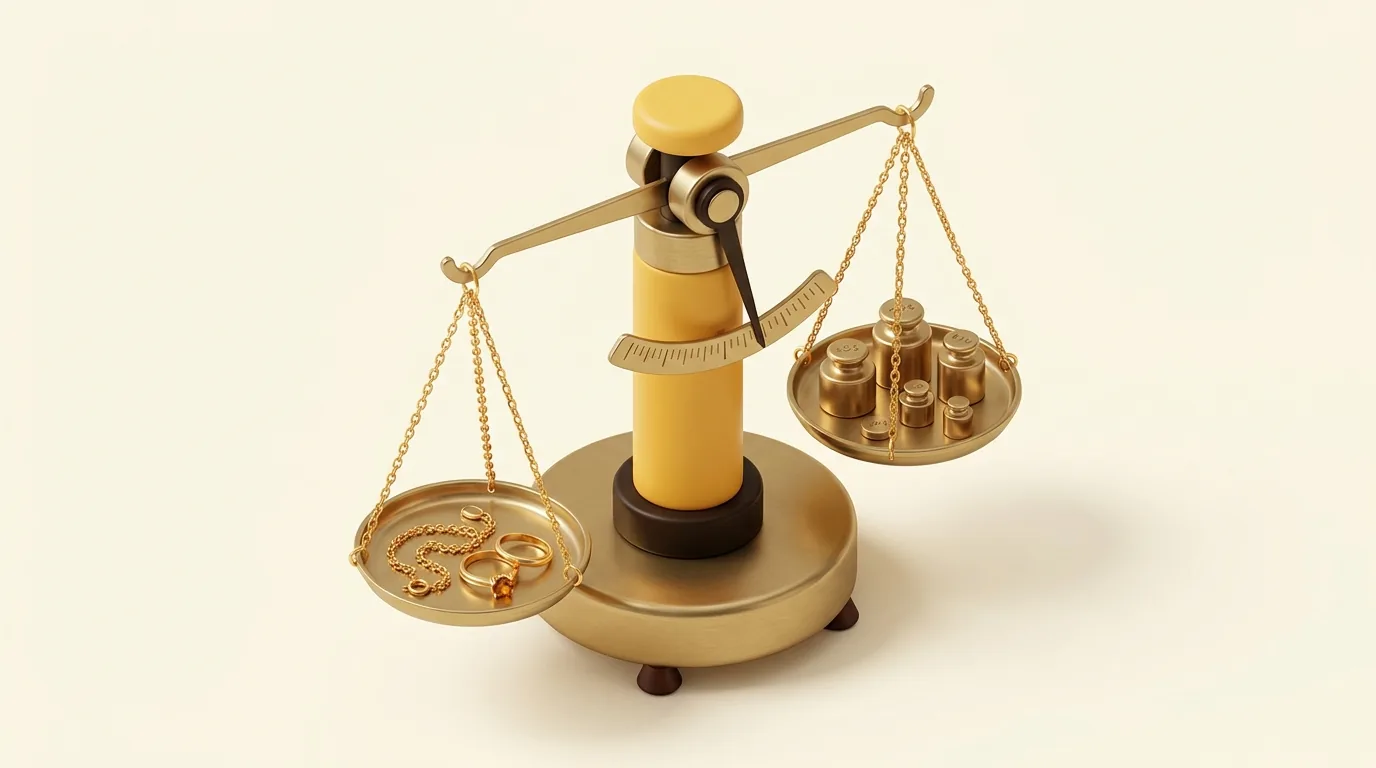
- Precise weighing. The metal is weighed to the tenth of a gram, on a professional scale, in front of you.
The value is then calculated simply: weight × gold content × the day's rate. The price of gold changes every day; it's displayed in real time on our home page. It's your best reference before any sale.
What you can sell (and what can't be bought back)
Wondering whether your item qualifies? Here's a clear guide:
- Can be bought back: gold crowns, bridges, inlays, old gold teeth, prosthetics containing precious metal — whether they're clean, damaged, or incomplete.
- Can't be bought back: items made purely of ceramic, resin, or dental steel, which contain no precious metal. Don't worry: the test tells the difference immediately.
A reassuring detail: the appearance of the piece has no bearing on the resale value. A worn, stained, or bent crown is worth exactly the same as an intact one, as long as it contains the same amount of gold. It's the metal that counts, not the looks.
The steps to sell your dental gold
- Gather your items. Crowns, bridges, old teeth: collect everything, even the small pieces. Every gram counts.
- Ask for a transparent estimate. The testing and weighing should be done in front of you, and the price should be explained to you (content + weight + rate).
- Check the day's rate on our home page before deciding, so you arrive already knowing the order of magnitude.
- Sell where they pay cash, safely, in a professional, established place.
Try it: gather your old gold teeth and send us a photo. You'll often be surprised by what a small pile of metal sitting in a drawer is worth.
Selling safely
- Favor a professional, established place rather than an improvised buyer.
- Bring an ID. A serious buyer verifies the seller's identity: it's a protection for you as much as for them (why?).
- Refuse any estimate made out of your sight.
- Insist on clear, immediate payment. At Jayma Or, it's cash, the same day.
Can't travel? We'll send a trusted courier to your home or office to carry out the transaction safely.
Frequently Asked Questions
Is dental gold really worth money?
Yes, as long as it contains a precious alloy — which is almost always the case. The value depends on the amount of gold present, determined by a test and a weighing.
What if part of it is ceramic?
No problem. We separate the metal from the ceramic before weighing: only the precious metal enters the calculation. The presence of ceramic doesn't prevent the sale.
Do I need to clean or prepare my gold teeth?
It's not necessary. You can rinse them if you like, but their condition or cleanliness doesn't affect the value: it's the weight and the gold content that count.
How much is a gram of dental gold worth?
It depends on the gold content of the alloy and the day's rate. Since we can't invent a figure, the fairest approach is to give you an estimate after testing and weighing. The day's rate is displayed on our home page.
When do I get paid?
Immediately. Once the metal is tested, weighed, and the price accepted, you're paid cash the same day — usually within a few minutes.
Take action: get your dental gold appraised for free
You now know that dental gold is a real precious metal, how it's evaluated, and how to sell it safely. There's only one step left.
Get a free, no-obligation estimate: send a photo of your items via WhatsApp to +221 78 111 66 87, or book an appointment. We test, weigh, and pay cash the same day — and we can send a courier to you.
That little pile of forgotten metal can turn back into cash today. Write to us: in a few minutes you'll know what it's really worth.