
Deciding to sell your gold jewelry is easy. Doing it at the right price is another story. Many people in Dakar take the plunge with only a vague idea of the value of their gold, accept the first offer that comes along, and discover too late that they could have gotten far more for exactly the same piece.
| Karat | Purity | Price per gram (spot, USD) | Jayma Or buy-back price |
|---|---|---|---|
| … | |||
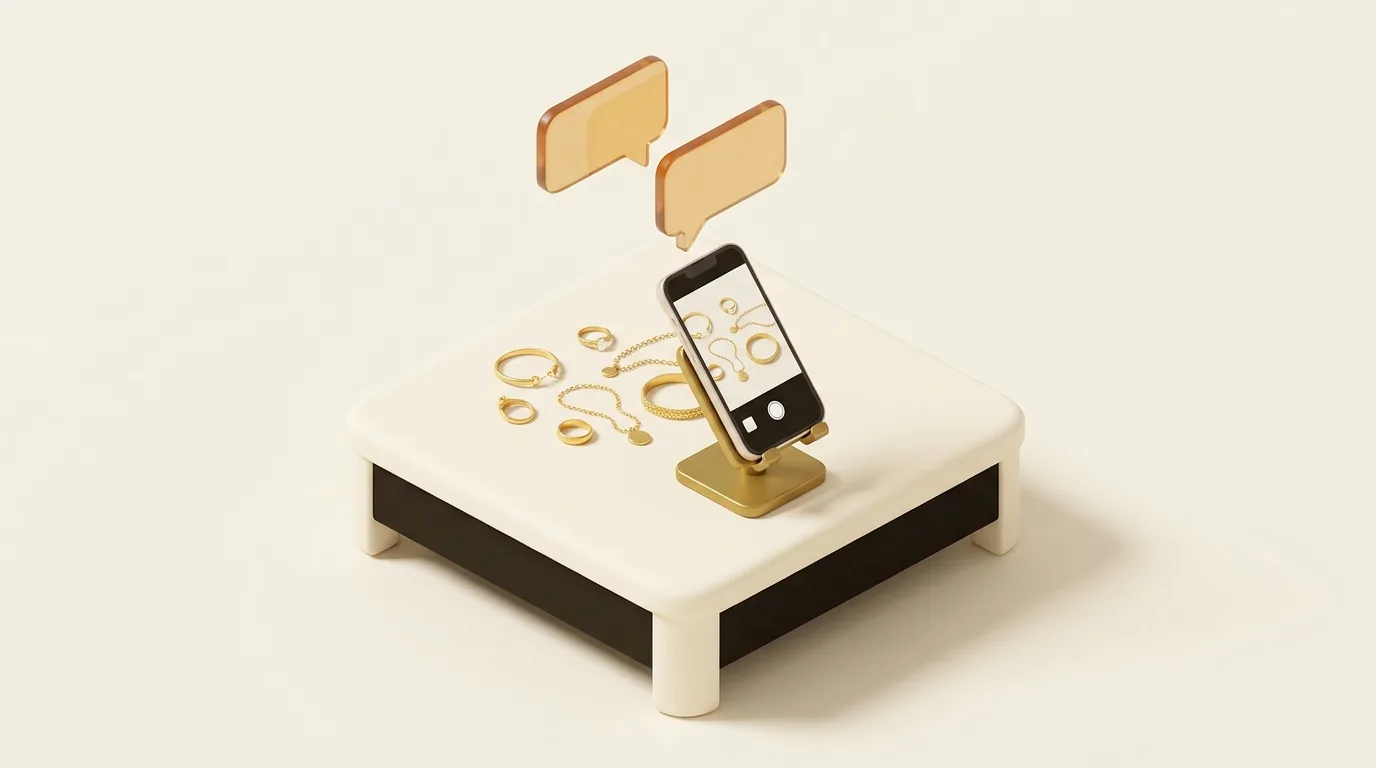
You tell yourself "I want to sell my gold jewelry", but one question stops you: where to start? Which broken chain, which forgotten ring, which mismatched earrings are really worth something? The good news: this gold has a precise value, and it takes only a few habits to recover it in full.
At Jayma Or, we buy gold jewelry, broken gold, scrap, coins, and bars in Dakar every day. We test and weigh in front of you, we explain the price, and we pay cash the same day, based on the global rate. Here, plainly, is how to go from the wish to sell to money in hand.
In this guide, you will discover:
- what really determines how much you will be paid;
- the most common mistakes that cost you money;
- how to prepare your jewelry before you head out;
- how to sell fast, safely, and without regret.
First of all: what sets the price of your gold?
If you remember only one thing, let it be this: the buyback price depends on the gold actually contained in the piece, not on what you paid for it in a shop. In a jewelry shop, the purchase price includes the workmanship, the brand, and the seller's margin. At resale, all of that disappears; only the metal remains.
Three factors, and three only, set the amount:
- The karat (the purity). 24 karat gold is 99.9% pure, 21 karat 87.5%, 18 karat 75%, 14 karat 58.3%. The higher the karat, the more gold the piece contains, the more it is worth.
- The exact weight, measured to the gram and the tenth of a gram on a precision scale.
- The current rate, which changes daily according to the global market.
The formula is simple: weight × purity × price per gram = the value of your gold. To understand in detail how each karat translates into a price, read our article on the price of gold jewelry in Senegal.
The mistakes that cost you money
Most bad sales are not due to low-value gold, but to a few avoidable traps:
- Accepting an estimate "by eye". Without a test or a scale in front of you, no figure is serious. Be wary of a price quoted by simply looking at the piece.
- Not knowing the current rate. Without a benchmark, it is impossible to judge whether an offer is fair. You then rely entirely on the buyer.
- Selling in a hurry. A sale made calmly, in a professional setting, almost always earns more than a transaction made under pressure.
- Confusing gold resale with the shop. Hoping to recover the purchase price of a new piece leads to disappointment. The resale value is that of the metal, full stop.
Do you recognize yourself in one of these mistakes? That is exactly what this guide helps you avoid.
How to prepare your jewelry before selling
A few minutes of preparation are enough to approach the sale from a position of strength:
- Gather all your gold. Chains, rings, bracelets, earrings, medals, and even broken or mismatched gold. Nothing is too damaged: only the metal counts.
- Look for the hallmark on each piece. A small marking (24K, 21K, 18K, 14K or 999, 875, 750, 585) indicates the karat. Can't find it? A quick test will determine it precisely.
- Weigh your jewelry roughly on a kitchen scale, just to get a rough idea.
- Check the current rate before you head out, karat by karat.
Do the test: multiply the approximate weight by the price per gram corresponding to your karat. You already get a realistic range — and you will immediately know whether an offer is serious.
Where to sell, and how to stay safe
In Dakar, you can turn to a neighborhood jeweler, to private individuals, or to a counter specialized in buying gold. The specialized counter remains the most advantageous option: a price calculated on the global rate, a transparent test and weighing, immediate payment. To compare these options in detail, see our article where to sell gold jewelry in Senegal.
A few safety rules to never overlook:
- Favor an established professional setting over an improvised meeting with a stranger.
- Bring an ID: a serious buyer verifies the seller's identity, which is a protection for you.
- Insist on a test and a weighing in front of you, and on a clear, immediate payment.
Can't make the trip? We can send a trusted courier to your home or office to carry out the transaction in complete safety.
Frequently Asked Questions
My jewelry is broken or damaged, does it still have value?
Yes, completely. A broken, bent, or mismatched piece is worth exactly the gold it contains. The aesthetic condition takes nothing away from its resale value.
How long does the transaction take?
Very little: once the piece is tested, weighed, and the price accepted, you are paid cash, usually within a few minutes.
Do I need an appointment?
It is not required, but it makes things easier. You can also send us a photo by WhatsApp for a first free estimate before coming in.
Will I pay any fees or commission?
No. The price quoted after the test and weighing is the amount you receive in cash, with no hidden fees.
What if I don't want to sell for good?
That is possible: our gold safekeeping and buyback agreement service lets you obtain cash while getting your jewelry back later.
Take action: get your free estimate
You now know what sets the price, which mistakes to avoid, and how to prepare your jewelry. All that's left is the concrete step.
Get a free estimate with no obligation: send a photo of your jewelry by WhatsApp to +221 78 111 66 87, or make an appointment. We test, weigh, and pay cash the same day — and we can come to you if needed.
Those pieces sitting in a drawer can become money again as soon as today. Check the current rate, then write to us: in a few minutes you will know what they are really worth.