
Two pieces of jewelry can shine in exactly the same way and have almost no value in common. One is solid gold; the other has only a thin film of gold over an ordinary metal. To the eye, it is impossible to tell them apart. When it comes time to sell, the difference can be a hundredfold.
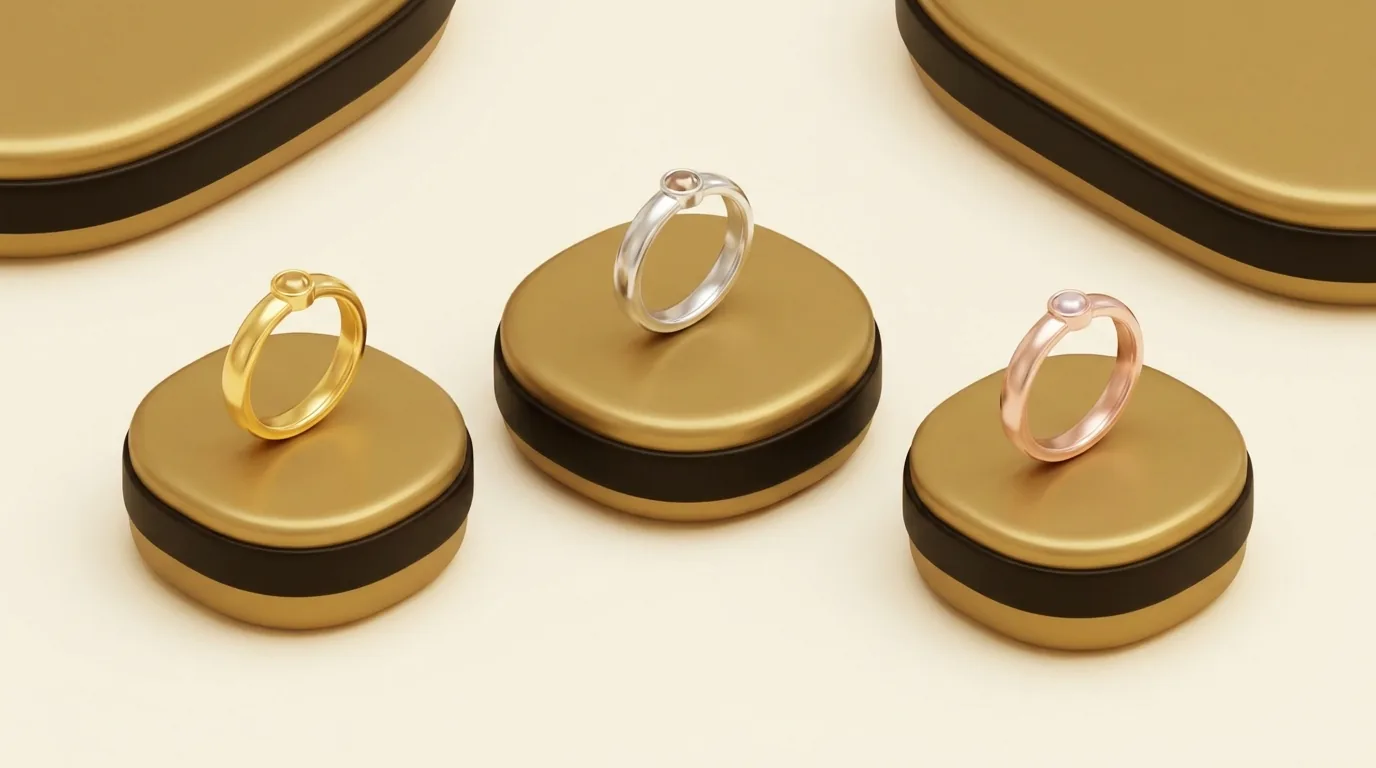
Do you have a chain, a ring, or earrings whose true nature you don't know? Learning to recognize the different types of gold means avoiding paying too much for a piece that is worth little — and, above all, never giving away a piece that is worth a great deal.
At Jayma Or, we buy gold jewelry, broken gold, scrap, coins, and bars in Dakar every day. We test, we weigh in front of you, and we pay cash, the same day, based on the global rate. This daily experience has taught us one thing: most people don't really know what they own. Here is what you need to see clearly.
In this article, you will discover:
- the difference between solid, plated, filled, and vermeil gold — and which one truly has value;
- what karats mean (24K, 21K, 18K, 14K) and their exact purity;
- why the color of gold (yellow, white, rose) says nothing about its value;
- how to recognize your type of gold and estimate its real value.
Solid, plated, filled, vermeil: the distinction that changes everything
This is the first thing to understand, because it is where the most costly mistake hides. Not everything that is gold-colored is "gold" in the sense that matters at resale.
- Solid gold. The piece is made of gold (alloyed with other metals) throughout its mass. It is the only type that has a real buyback value, calculated by the gram. This is what interests us as buyers.
- Gold plated. An ordinary metal (brass, copper) covered with an extremely thin layer of gold, a few microns thick. The appearance is beautiful, but the amount of gold is tiny: the resale value is almost nil.
- Gold filled. A much thicker layer of gold than plating, mechanically bonded to a base metal. More durable than plating, but it is still mostly made of another metal; its buyback value remains very low.
- Vermeil. Solid silver covered with a layer of gold. Its value comes mainly from the silver underneath, not from the gold coating.
The rule to remember: only solid gold sells for the weight of its gold. The rest is mostly a matter of fashion. This is not a flaw — a plated piece can be gorgeous — but you need to know it before buying or selling.
Karats: purity expressed in numbers
Once we are talking about solid gold, the question of purity comes up, expressed in karats. The karat measures the proportion of pure gold in the alloy, on a scale of 24.
- 24 karat (24K): 99.9% gold. Almost pure gold. Magnificent and very precious, but soft: it scratches and bends easily, which is why it is rare in everyday jewelry.
- 21 karat (21K): 87.5% gold. Very popular in West Africa and the Middle East. A good balance between gold content and strength.
- 18 karat (18K): 75% gold. The standard of fine jewelry: enough gold for the value, enough alloy for durability.
- 14 karat (14K): 58.3% gold. More durable, less rich in gold, and therefore cheaper per gram.
The logic is simple: the higher the karat, the more gold the piece contains, the more it is worth. A gram of 21K gold is worth considerably more than a gram of 14K gold. To go further into how these alloys are composed, read our article on the different types of gold alloys.
Yellow, white, rose: color does not make value
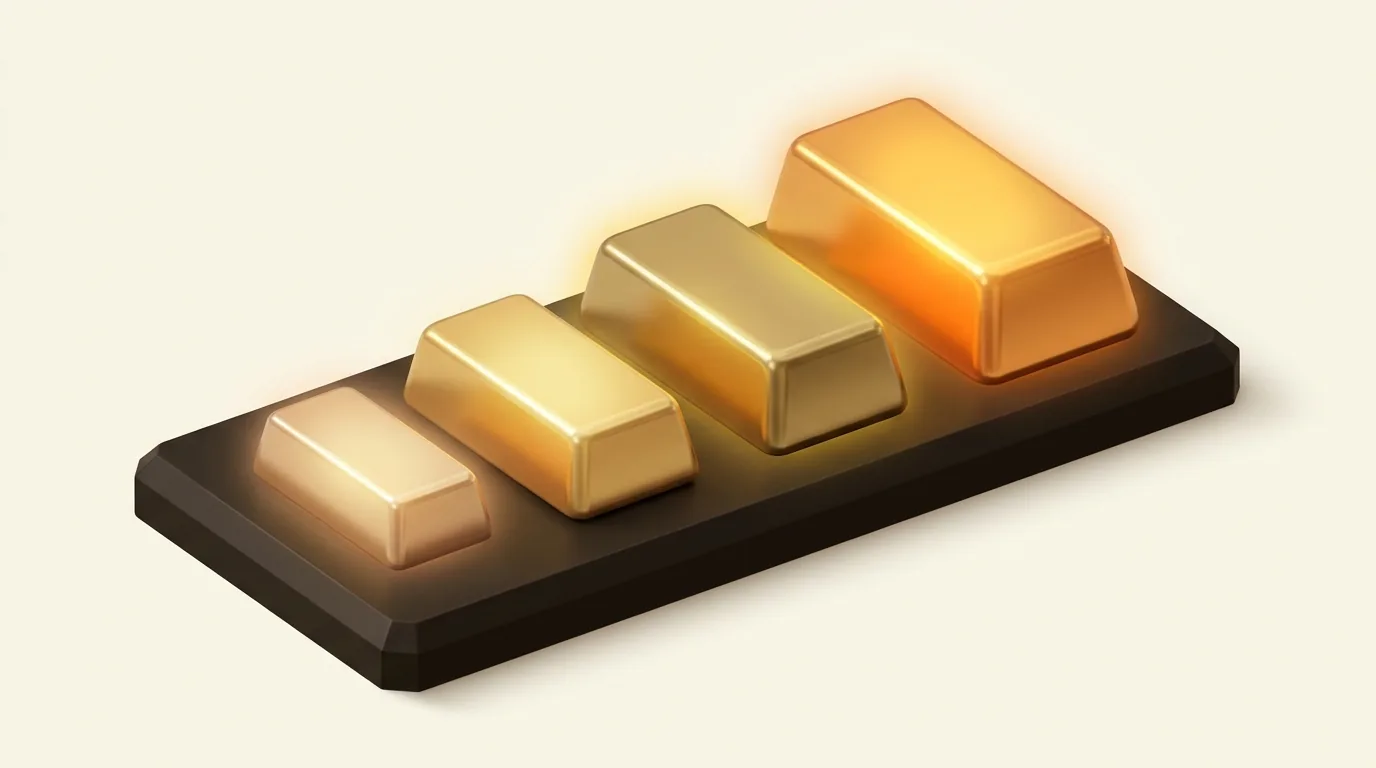
Many people believe that white gold is worth more than yellow gold, or the other way around. This is false. The color depends solely on the metals added to pure gold: copper leans toward rose, silver or palladium toward white. At equal karat, an 18K yellow gold and an 18K white gold contain exactly the same amount of gold — and are bought back at the same price.
What matters for value, then, is not the shade but the karat and the weight. Color is a matter of taste and style.
How to recognize your type of gold (and estimate it)
Here is a simple method to assess a piece before any sale:
- Look for the hallmark. Inside a ring or on the clasp of a chain: 24K, 21K, 18K, 14K, or the numbers 999, 875, 750, 585. They indicate the karat.
- Beware of the markings "GP", "GF" or "plated". They signal gold plated or filled, with a low buyback value.
- No hallmark? Don't worry. A professional test determines the purity precisely, without damaging the piece.
- Have it weighed. The exact weight, multiplied by the current rate for the right karat, gives the real value.
Want an instant benchmark? The current buyback rate is shown in real time on our home page, karat by karat. Do the test: estimate the weight of your piece, multiply by the rate for its karat, and you will already have a range.
Frequently Asked Questions
How do I know if my jewelry is solid or plated gold?
The hallmark is the first clue. A professional test removes all doubt: we carry it out in front of you, free of charge, without damaging the piece. It is the only reliable way to decide.
Which karat sells best?
All solid golds are bought back, but the higher the karat, the higher the price per gram. A 21K piece earns more than a 14K piece of the same weight, because it contains more gold.
Is 24 karat gold always the best choice?
For the value of the gold, yes: it is the purest. For a piece worn every day, it is very soft and bends; 21K or 18K offer a better compromise between richness and strength.
Do you buy gold plated or vermeil?
Our trade is buying solid gold, whose value is calculated by weight. Plated gold contains too little gold to have a buyback value. If in doubt, bring in your piece: we test it and tell you honestly where it stands.
Take action: get your gold appraised for free
You now know how to tell solid gold from plated, how to read a karat, and that color changes nothing about value. The last step? Knowing the exact price of your gold.
Get a free estimate, with no obligation: send a photo of your jewelry by WhatsApp to +221 78 111 66 87, or make an appointment. We test, weigh in front of you, and pay cash the same day. And if you prefer to keep your jewelry while obtaining cash, discover gold safekeeping and buyback agreements.